



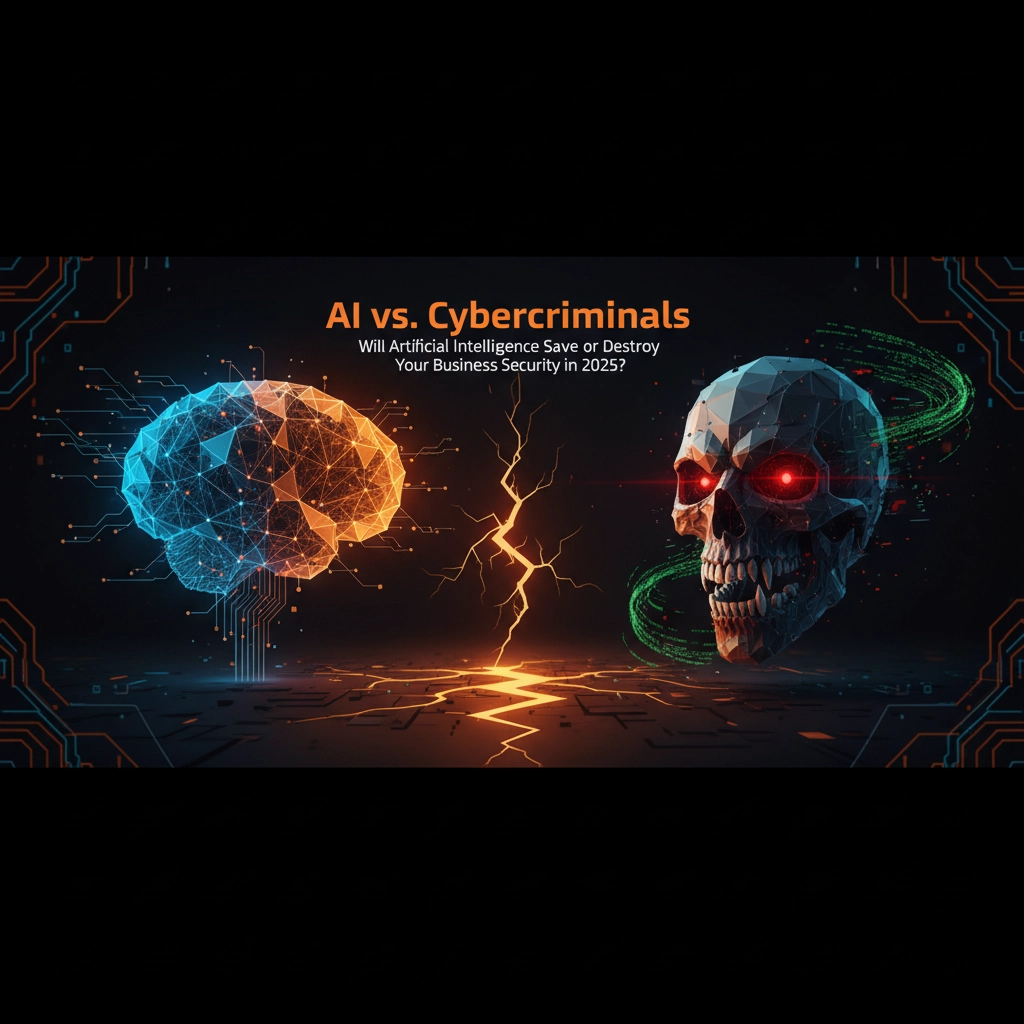
27 Sep AI vs. Cybercriminals: Will Artificial Intelligence Save or Destroy Your Business Security in 2025?
Here's the uncomfortable truth about AI and cybersecurity in 2025: it's both your best friend and your worst enemy, often at the same time. While AI is revolutionizing how we protect businesses from cyber threats, it's also giving cybercriminals superpowers they've never had before.
So which side wins? Well, that depends entirely on how smart you are about using it.
AI: The Security Superhero You Didn't Know You Needed
Let's start with the good news. AI is absolutely crushing it when it comes to defending businesses against cyber threats. Think about it – traditional cybersecurity was like having a security guard who could only watch one camera at a time. AI? That's like having a security guard with 10,000 eyes who never sleeps, never gets tired, and can spot trouble from a mile away.
The numbers tell the story. Modern businesses deal with thousands of security alerts every single day. Most of these overlap or hide in massive log files that would take human analysts weeks to sort through. AI can cross-reference all of this data instantly, spotting patterns that would be impossible for humans to catch.
But here's where AI really shines: zero-day threats. These are the nasty surprises that no one has ever seen before – vulnerabilities that don't match any existing security rules or signatures. Traditional security systems basically shrug their shoulders when they encounter these. AI, on the other hand, doesn't need to have seen something before to know it's dangerous. It looks at behavior patterns and says, "Hey, this doesn't look right," even if it's never encountered that specific threat.
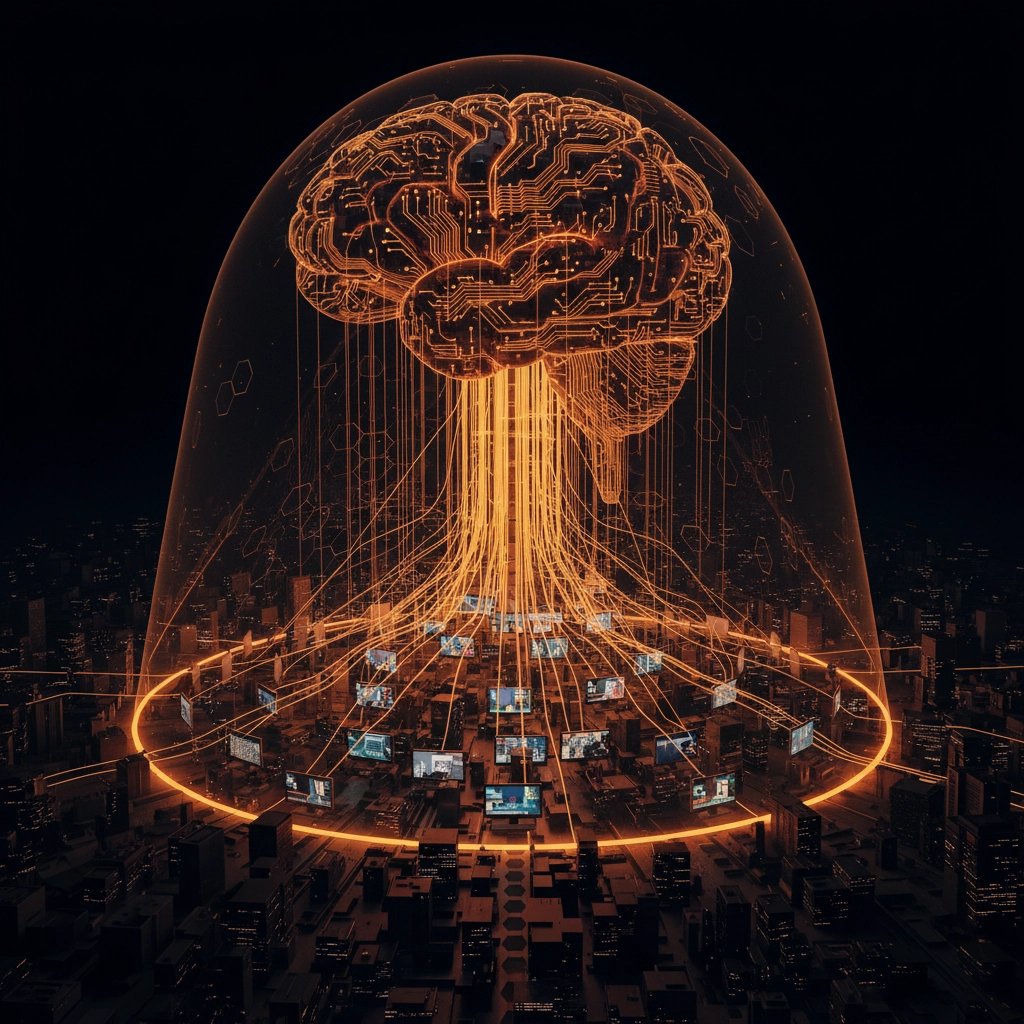
The cybersecurity industry has been screaming about a talent shortage for years. There simply aren't enough qualified cybersecurity professionals to go around, and the ones that exist are drowning in routine tasks. AI is changing that game completely. It handles the boring, repetitive stuff – like sorting through thousands of low-priority alerts – so human experts can focus on the big-picture strategy work that actually moves the needle.
The Dark Side: When Cybercriminals Get AI-Powered
Now for the scary part. Cybercriminals didn't just sit around twiddling their thumbs while the good guys got AI superpowers. They've been busy too, and what they're doing with AI is honestly pretty terrifying.
Remember those obviously fake phishing emails with terrible grammar and spelling mistakes? Yeah, those days are over. AI can now craft phishing emails that are so convincing, they could fool your grandmother, your IT guy, and probably you on a bad day. We're talking about personalized, well-written emails that reference real details about your business, your recent activities, and your personal interests.
But it gets worse. Deepfake technology means cybercriminals can now clone voices and create fake video calls. Imagine getting a call from your "CEO" asking you to transfer funds urgently. The voice sounds exactly right, the story seems plausible, and you're under pressure to act fast. That's not science fiction – it's happening right now.
The scale is what really keeps cybersecurity experts up at night. AI allows cybercriminals to automate their reconnaissance, rapidly gathering intelligence on thousands of potential targets simultaneously. What used to require weeks of manual research can now be done in hours, and it's getting faster every month.
The Arms Race: When Both Sides Have Nukes
Here's where things get really interesting – and a bit scary. We're in the middle of a full-blown AI arms race between cybersecurity defenders and cybercriminals. Both sides are using increasingly sophisticated AI tools, and it's becoming an escalating game of technological one-upmanship.
Recent research shows that 74% of IT security professionals have experienced critical impacts from AI-fueled cyberattacks. At the same time, 60% of IT professionals worry their organizations aren't ready for AI threats. That's a pretty sobering reality check.
The problem is that AI-powered malware can now change its code to evade detection. Traditional antivirus software looks for specific signatures or patterns, but if the malware keeps rewriting itself, those signatures become useless. It's like trying to catch a shapeshifter – just when you think you've got it figured out, it transforms into something completely different.
What This Means for Your Business
If you're running a small or medium business, you might be thinking, "This all sounds like big enterprise problems." Unfortunately, that's not the case anymore. SMBs are actually becoming prime targets because cybercriminals know you're less likely to have sophisticated defenses in place.
The explosion of AI agents in business is creating new vulnerabilities faster than we can secure them. By the end of 2025, experts predict there will be over 45 billion non-human identities (think AI bots, automated systems, and digital agents) operating across business networks. That's 12 times more than the number of humans in the global workforce.
Here's the kicker: only 10% of executives report having a well-developed strategy for managing these non-human identities. That's a massive security gap just waiting to be exploited.

Fighting Back: Your AI Security Game Plan
So what's a business owner supposed to do? Panic? Hide under a desk? Definitely not. The key is understanding that AI isn't inherently good or evil – it's a tool. And like any powerful tool, it's all about how you use it.
First, you need to accept that traditional, reactive security approaches won't cut it anymore. You can't just install antivirus software and call it a day. You need AI-powered security solutions that can think and adapt as fast as the threats they're fighting.
Identity security is absolutely critical. With 80% of breaches involving some form of compromised identity, and AI making social engineering attacks more sophisticated than ever, you need to lock down who has access to what in your organization. This means implementing what security experts call an "identity security fabric" – a comprehensive approach that secures every identity, whether it's human, non-human, or AI-powered.
If you're deploying AI tools in your business (and let's face it, most of us are), you need to build security into them from the ground up. Don't just grab the shiniest AI tool and hope for the best. Think about security, interoperability, and visibility from day one.
The Bottom Line: AI Will Save You… If You Let It
Here's the honest answer to whether AI will save or destroy your business security in 2025: it depends entirely on you.
Organizations that proactively invest in AI-driven security solutions, implement solid identity management frameworks, and approach AI deployment with security-first thinking will come out on top. They'll have enhanced threat detection, automated response capabilities, and the ability to stay ahead of evolving attack vectors.
But businesses that stick their heads in the sand – those that deploy AI without proper security controls or keep relying only on traditional defense mechanisms – are setting themselves up for a world of hurt. They'll be sitting ducks for AI-powered attacks that operate at machine speed and scale.
The cybersecurity landscape in 2025 isn't just about having the best technology – it's about having the smartest strategy. The organizations that understand this and act accordingly will find AI to be their greatest security asset. Those that don't may discover it's their greatest vulnerability.
The choice, as they say, is yours. But choose wisely, because in this game, second place means you're already compromised.
No Comments